What is IoT and what does it mean for your business?
We’re going to explore how IoT is transforming industries across the UK, and how...








In today’s fast-evolving digital landscape, businesses face an increasing need to optimise their networks for speed, security, and scalability. Among the most common technologies businesses turn to are SD-WAN (Software-Defined Wide Area Network) and VPN (Virtual Private Network). Though often mentioned together, these two solutions serve very different purposes, and understanding their unique benefits is crucial for making an informed choice.
At Elite Group, we specialise in SD-WAN, enterprise network solutions, and cloud communications. If you’re looking to enhance your network infrastructure, our experts can help you leverage these cutting-edge technologies. Get in touch with our experts for more information.
In this blog, we’ll break down the differences between SD-WAN and VPN, highlighting their benefits, use cases, and how they can work together to improve your business’s network performance and security.
Before we dive into the specifics of each technology, it’s important to understand the basic distinctions between SD-WAN and VPN, as both play pivotal roles in modern network setups.

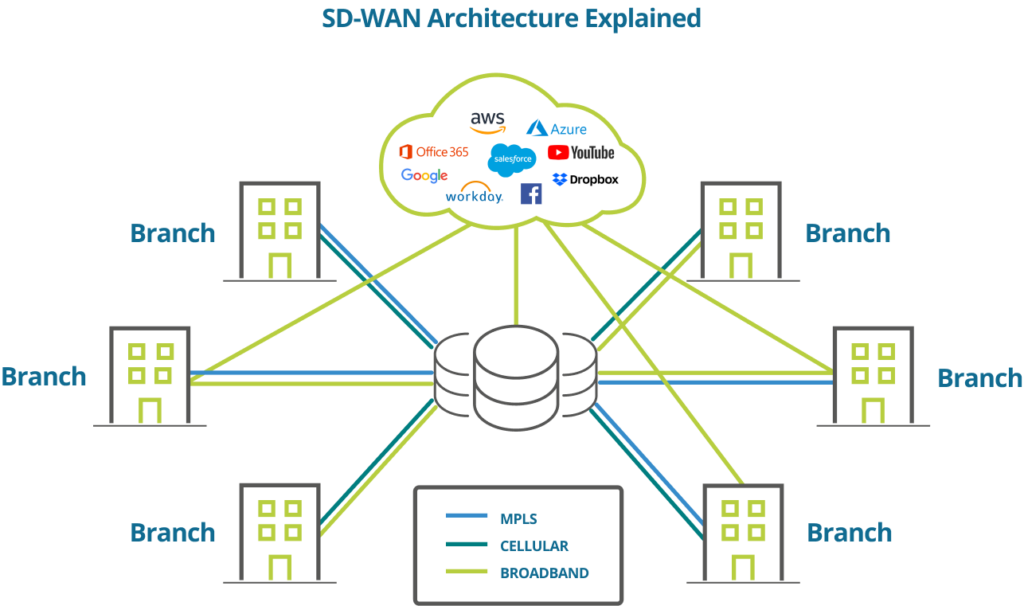
SD-WAN stands for Software-Defined Wide Area Network, and it represents a shift from traditional hardware-based WAN solutions to software-defined networking that optimises the flow of data across a business’s wide-area network.
Traditional WANs (Wide Area Networks) connect multiple remote offices, data centres, and branch locations over long distances using physical routers and circuits. These networks rely on hardware-based solutions to manage traffic, which can be costly and inefficient, especially as businesses scale or require more agile, cloud-based services.
Cloud-based SD-WAN solutions address the limitations of traditional WAN by using software to manage and control network connections across various connection types, such as broadband, LTE, and MPLS. This flexibility makes SD-WAN ideal for businesses that need reliable, cost-effective, and modern networking solutions.
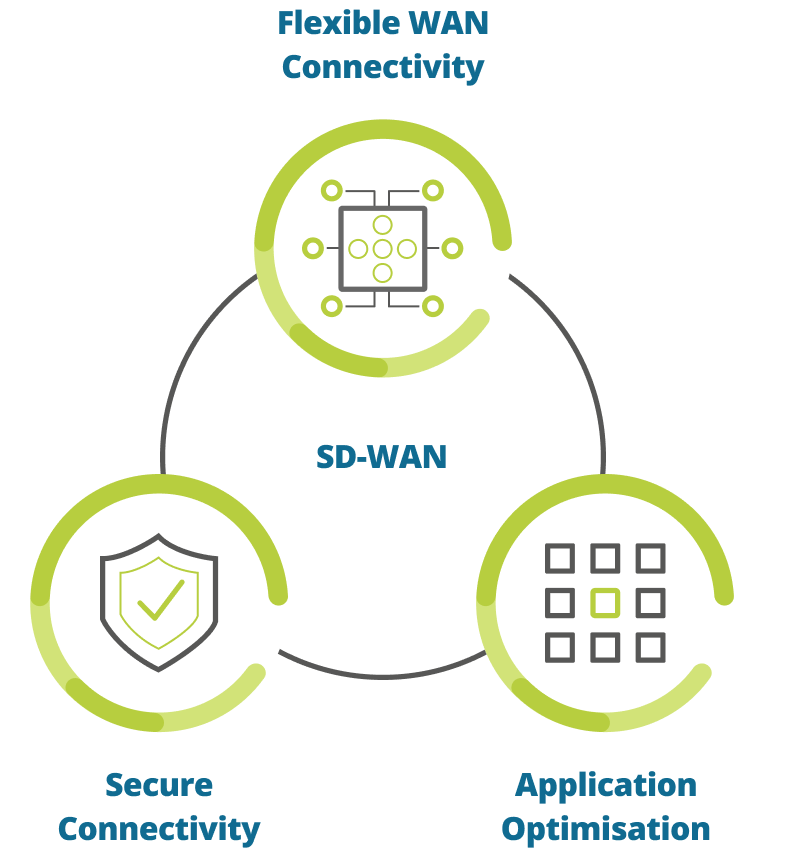
One of the most powerful features of SD-WAN is application-aware routing, which intelligently prioritises critical applications while ensuring improved network performance. This technology ensures that your business network runs smoothly, even during periods of heavy usage, by dynamically adjusting the routing of traffic based on the specific needs of your applications.
A VPN (Virtual Private Network) is designed to secure an internet connection by routing traffic through a private server rather than directly through an internet service provider (ISP). This creates an encrypted “tunnel” between the user’s device and the VPN server, making it much more difficult for hackers or third parties to intercept data.
For businesses, VPNs are essential for safeguarding sensitive information, especially when employees access the network remotely or use public internet connections. By masking the user’s IP address and by incorporating traffic encryption, VPNs prevent unauthorised access and ensure that communications remain private. Internet Key Exchange (IKE) is often used within VPN protocols to securely connect users and exchange encryption keys, establishing secure VPN tunnels and ensuring that data remains protected during transmission.
These security solutions are commonly used by remote workers to access company resources securely, as well as for businesses with employees across multiple locations who need safe access to internal networks. However, VPNs don’t necessarily optimise network traffic or offer the same level of flexibility and scalability as SD-WAN.

If you’re looking to optimise your network for performance, scalability, and security, SD-WAN offers several compelling advantages over traditional WAN solutions.
While both SD-WAN and VPNs are vital for secure and efficient network management, it’s important to clarify that SD-WAN cannot fully replace a VPN. In fact, SD-WAN often incorporates VPN technology as part of its solution, enhancing network performance while maintaining the security benefits that VPNs provide.
SD-WAN can route traffic across multiple internet connections for optimal speed and performance, while also supporting VPN connections to ensure that sensitive data remains secure.
On the other hand, VPN is a dedicated tool for securing a single user’s connection, whereas SD-WAN manages network-wide traffic and improves application performance for an entire organisation.
Ultimately, businesses may find that using both SD-WAN and VPN together offers the best of both worlds: enhanced network performance and robust security.

Cloud resources are evolving all the time, which is why it’s important to remain aware when discussing VPNs and SD-WAN.
While SD-WAN and VPNs have distinct purposes, there are cases where businesses may benefit from SD-WAN more than VPN:
The right choice depends on your business’s specific needs, and this is where we can help.
At Elite Group, we specialise in helping businesses implement SD-WAN and other cutting-edge networking solutions. If you’re ready to optimise your network and unlock the potential of modern technology, speak to an Elite Group expert today to explore how SD-WAN can transform your business operations.

Explore Elite Group's latest industry updates, insights, and practical guidance, designed to help your business make better technology decisions.